济南苏鑫电缆桥架有限公司
客户咨询热线
0531-85767688
售后热线:15668327566
联系基地:山东省 德州市协同发展产业园D06幢
文章来源:https://www.sddlqj.cn/ 作者:电缆桥架厂家发布时间:2026-03-04 浏览次数:1
不少电工在施工现场常有疑问:桥架不就是铁的吗?导电没问题,还接什么地啊?明明里面都穿着带金属护套的电缆,还要桥架接地是不是重复了?桥架又不带电,非得每段都搭根地线是不是多此一举?别急,其实这是很多一线人员经常误解的地方,今天我们就有效讲清楚——电缆桥架,到底为啥建议接地?01行业误区有以下三点误区1:桥架不是电气设备,不接地也不带电,没关系。
Many electricians often have questions on construction sites: Isn't the bridge frame made of iron There's no problem with conductivity, what else is there to connect to Is it repetitive to have cable trays grounded even though they are all wearing cables with metal sheaths inside Isn't it unnecessary to install a grounding wire on every section of the bridge since it's not electrified Don't worry, this is actually a common misconception among frontline personnel. Today, we will thoroughly explain why cable trays must be grounded There are three misconceptions in the industry: 1. Cable trays are not electrical equipment, and they are not grounded or charged. It's okay.
误区2:桥架如果只是做电缆支撑结构,不当做保护导体,可以不接地。
Misconception 2: If the bridge is only used as a cable support structure and not as a protective conductor, it may not be grounded.
误区3:电缆护套接地就够了,桥架多此一举。这些看似有“道理”的说法,其实在设计规范与现场安规里,统统站不住脚。02为什么桥架建议接地桥架是导电金属结构,虽然本身不带电,但在以下情况下很可能成为“危险载体”:电缆故障时的感应电压:电缆护套损坏,故障电流可能短暂窜入桥架金属体;意外接触:误操作或电缆破损导致相线与桥架接触;感应耦合电压:高压电缆并排敷设时产生的感应电场,尤其在长距离布线中更明显;静电积聚:尤其在干燥环境中,桥架可积聚电荷,造成触电感应。以上任意一点,都可能让桥架成为一个“悬浮高电位体”,对人员构成危险。03规范依据与强制性要求在《建筑电气工程施工质量验收规范GB50303-2015》《国家电网安规图册》《民用建筑电气设计规范JGJ16-2008》等明确指出:金属桥架建议接地,视为电气设备外露可导电部分。不得以桥架替代PE线,桥架接地不可用作主接地干线。每段桥架之间应可靠电气连接,跨接线需压接或焊接处理,防止松动失效。跨接线的非常小截面积应符合规范要求,通常铜芯跨接线不应小于 4mm,以确保故障电流的导流通路可靠。也就是说,不管你现场看起来“带不带电”,“危险不危险”,桥架接地不是“建议”,是强制性条文!04桥架接地常见问题盘点在工程检查与运行中,以下问题出色为常见:
Misconception 3: Grounding the cable sheath is enough, it's unnecessary for the cable tray. These seemingly reasonable statements are actually untenable in design standards and on-site safety regulations. Why must the cable tray be grounded The cable tray is a conductive metal structure that, although not electrically charged, may become a "dangerous carrier" in the following situations: induced voltage in the event of cable failure: cable sheath damage, fault current may briefly enter the metal body of the cable tray; Accidental contact: accidental operation or cable damage leading to contact between the phase line and the bridge frame; Inductive coupling voltage: The induced electric field generated when high-voltage cables are laid side by side, especially in long-distance wiring; Static electricity accumulation: Especially in dry environments, cable trays can accumulate charges, causing electric shock induction. Any of the above points may turn the bridge into a "suspended high potential body", posing a danger to personnel. The basis and mandatory requirements of the 03 standard are clearly stated in the "Code for Acceptance of Construction Quality of Building Electrical Engineering GB50303-2015", "State Grid Safety Regulations Atlas", "Code for Electrical Design of Civil Buildings JGJ16-2008", etc.: Metal cable trays must be grounded and considered as exposed conductive parts of electrical equipment. Cable trays shall not be used as a substitute for PE wires, and cable tray grounding shall not be used as the main grounding line. Each section of the bridge should be reliably electrically connected, and jumper wires should be crimped or welded to prevent loosening and failure. The minimum cross-sectional area of the jumper wire should meet the requirements of the specifications. Generally, the copper core jumper wire should not be less than 4mm to ensure the reliability of the fault current diversion path. That is to say, regardless of whether you appear to be "electrified" or "dangerous" on site, bridge grounding is not a "suggestion", but a mandatory provision! In the process of engineering inspection and operation, the following issues are extremely common:
问题风险原因桥架与桥架连接处无跨接线电气连续性中断,故障电流无法导走施工偷工减料或未验收接地线仅在起始端接一次长距离桥架末端存在悬浮电位没有分段接地意识使用铝桥架未做防腐电缆鼻子连接接触电阻过大,接地失效没有使用专用接地配件把桥架当作PE线用不符合规范,存在故障电流过载风险惯性做法,图省事非常提示:在铝制桥架或不同材质桥架连接时,为防止电化学腐蚀导致接触电阻提升,应使用过渡连接片或采用铜铝过渡端子进行连接,严禁将铜导体直接与铝桥架表面压接。
The reason for the risk of the problem is that there is no jumper wire at the connection between the bridge and the bridge, and the electrical continuity is interrupted. The fault current cannot be conducted. Construction has been cut corners or the grounding wire has not been accepted. Only one long-distance bridge is connected at the starting end. There is a floating potential at the end of the bridge, and there is no awareness of segmented grounding. The aluminum bridge is not used for anti-corrosion cable nose connection. The contact resistance is too high, and the grounding failure does not use special grounding accessories. The bridge is used as a PE line, which does not comply with the specifications and has the risk of fault current overload inertia. The picture is convenient. Special reminder: When connecting aluminum bridge or bridge of different materials, in order to prevent electrochemical corrosion and increase the contact resistance, transition connection pieces or copper aluminum transition terminals should be used for connection. It is strictly prohibited to directly press the copper.
一句话:桥架接地,不是你愿不愿意,是建议做、要做对、还得做全的硬性要求。
One sentence: Bridge grounding is not something you are willing or unwilling to do, but a mandatory requirement that must be done, done correctly, and fully implemented.
 济南火车站
济南火车站 曲阜孔子文化会展中心
 山东工艺美院
 公安厅服务展示
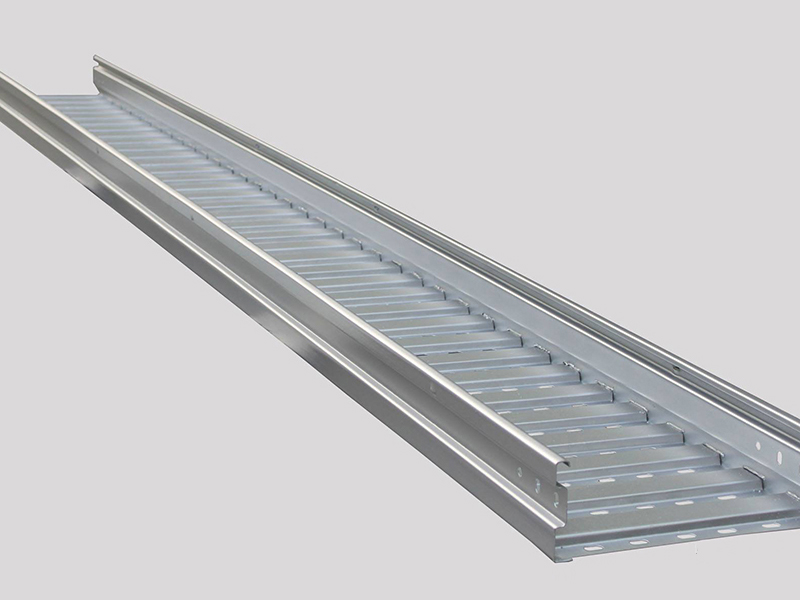 热镀锌托臂的选型要点与性能对比
热镀锌托臂作为电缆桥架的支撑部件,其性能直接影响整个布线系统的稳定性。主流产品按材质分为Q235碳钢热镀锌、不锈钢热镀锌(双镀层)及铝合金热镀锌三类,其中碳钢热镀锌托臂因性价比高、承重能力强成为通用首
TIME:2026-09-15
本网站部分内容来源于网络,如有侵权请告知!我们立即删除;本网站严格遵循国家相关法律法规规定,如有不当之处,请告知!我们立即删除。
网站备案:鲁ICP备2022033215号
济南苏鑫电缆桥架有限公司